How to create a working marketing calendar in Salesforce for your business
March 11, 2021 · 10 min read

If you’ve ever been a part of a marketing team, you know how easy it is to get carried away by business tasks and plans. Without an organized schedule, several hours could pass without you achieving much. The result of this is unhappy results, frustration, and even failure. If you’re in a fix and need urgent strategies, you’re where you should be.
This article discusses how to create a working marketing calendar and some marketing techniques that produce results. A fundamental and required tool in marketing is a marketing calendar. A marketing calendar is essentially a marketing assistant that guides you in a manner that leaves nothing out of the plan.
What is a Marketing Calendar?
A marketing calendar is a written blueprint that keeps your marketing activities on track. With one, it is easier to organize, visualize, and execute your activities. Consequently, it is an actionable tool that works towards achieving goals over a stipulated period.
Usually, several marketing calendar templates can plan activities yearly, monthly, weekly, and daily. The marketing calendar planner you use is solely based on preference. Of course, other factors like your goals, needs, and more could affect your choice; it ultimately takes time and resources to create a working marketing calendar.
A significant advantage of a marketing calendar is that it helps you meet deadlines. Furthermore, it fosters coordination amongst teams and managers too. Presently, several tools can help you organize your activities, some of them are:
- PDFs – editorial calendar template that integrates several kinds of content
- Excel/ Google Sheets- easy to adapt and customizable templates. Useful for collaborations
- Word/Google Docs – a word and spreadsheet template in Google
- Google Calendar – sets reminders for upcoming events. Schedule meetings and events
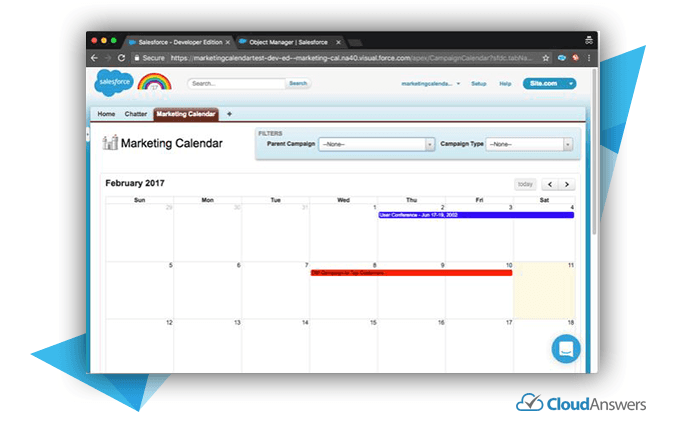
- Software: Calendar software like our Free Marketing Calendar for Salesforce can provide a readymade calendar that allows scheduling and visualizing content, budgets, goals, and events.
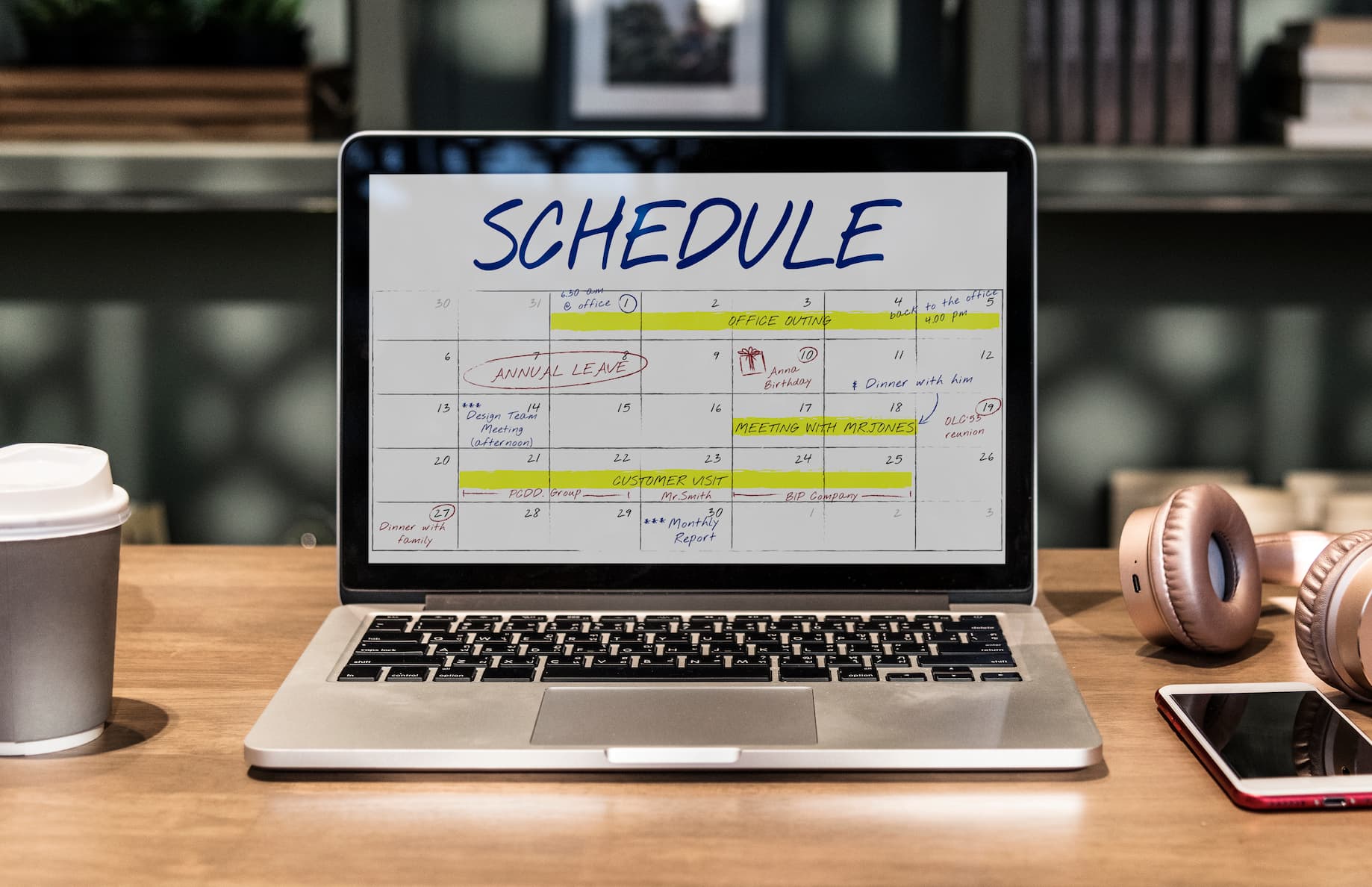
The Ideal Marketing Calendar
Marketing calendars are tailored towards addressing specific needs. Therefore, a successful marketing calendar should incorporate marketing activities in detail. A calendar is best used for its particular purpose:
- Spelling out individual event
- Spelling out the marketing cost for each result
- It should include an estimated time frame for the completion of the event.
- Expected results
The above elements help you see events at a glance while helping you work towards your goal per time. In the future, it aids planning and marketing. A marketing calendar should follow the following purposes;
- Plan each event to meet specific goals- planning helps you fine-tune your strategies in advance. It also affords you ample time to achieve each goal and keeps you within the time frame.
- A hub for team activities – as long as you document each detail on your marketing calendar, every team member stays aware of their roles. This helps them to work effectively and remain productive.
- Measures progress and workflow- you should be able to rely on your calendar for progress reports, workflow, and coordination. This fosters discipline and responsibility with a team as well as harmonization of efforts.
- Information-sharing- you can use a marketing calendar to share relevant information with team members. This feature is available in online Apps like CloudAnswers Marketing Calendar, supporting communication with people and free campaign calendar views.
- Track marketing actions- it is no surprise that a marketing calendar should track marketing actions. Since you clearly state your goals before each campaign, keeping track of your performance is ideal. While working on each event, you should know how far you’ve gone, what’s working, and what needs improvement.
- Be futuristic- a marketing calendar is a pointer to the future. Knowing what comes next is vital because it keeps you grounded in your goals. Therefore, staying aware of your next move is consistency in planning, a value that many successful businesses possess.
What a marketing calendar should include
Before you get into scheduling and brainstorming ideas for your calendar, be sure that your goals are in place. It should cover your brand’s values, your audience’s likes, and what your product or service provides.
Consider the following;
- The channels that engage your audience most – email, social media, blog posts, etc.
- The metrics you intend to improve on – engagement, followership, conversions, etc.
- How sales campaigns help your brand
- Brand awareness campaign options
Types of Marketing Calendars
The right marketing calendar is not just a document. It contains all the information about your marketing events in one place. As a result, it impacts your marketing performance by helping you curtail lapses. Here are some of the types of marketing calendars in the market;
CONTENT MARKETING CALENDAR
A marketing content calendar is popular amongst content creators, strategists, and marketers because it helps the organization of content marketing plans. As the need for content continues to grow, multiple people can create content for a common purpose. Therefore, having a content marketing calendar helps the group by providing timely information to everyone at once. Expectedly, a bigger project with more people requires more details. So, the calendar can receive as many details and updates as needed.
Overall, a content calendar that keeps a successful schedule helps you to plan ahead. For example, you can quickly deliver the former program to customers requesting samples. It saves time and brings more customers to your corner. To create a content marketing calendar, it is best if you considered content marketing calendar templates. Rather than create a calendar from scratch. All you do is fill in the details based on preference. Currently, there are tons of content calendar templates online. Some are SEO-focused, while others favor social media.
BLOG CALENDARS
A blog calendar is one of the best ways to keep your blogging habits and productivity on track. If you prefer a customized calendar, several engagement metrics could help. A blog calendar works significantly to develop consistency in the writer and produce engaging content. A blog calendar works to build a blogging strategy that delivers results.
In addition to helping you connect with readers, it attracts new customers. Furthermore, you can curate blog post ideas and a schedule. What’s more, it enables you to stay within the deadline.
SOCIAL MEDIA MARKETING CALENDAR
In a world where billions of people engage with social media daily, a social media marketing calendar helps you plan posts ahead of time. For instance, if you post many times in a day, the calendar organizes your tasks. Also, it gives an overview of which content performs better.
A typical social media calendar has a spreadsheet or an app where you can schedule posts. If you need to meet a deadline, it helps you manage your campaign effectively. Since needs differ, no calendar fits all categories or needs. Brands utilizing large volumes of posts may favor specialized software over spreadsheets.
Why a marketing Calendar is important
Recent research reports show that marketers who have deployed the marketing calendar tool 538%, due to the research by Evinex, were likely to finish on time. About 81% of goal-setters achieved their goals as well. Ultimately, a marketing calendar helps hit the goal while giving you an overview.
Marketing is not just a series of dates or a pattern of salesforce marketing. It is an intentional scheme that shapes the presence of any business or brand. Consequently, a marketing calendar keeps track of this scheme. To keep a business running, combining sales with awareness boost engagement. While sales tell people what you sell or offer, awareness focuses on brand promotion.
HOW TO CREATE A MARKETING CALENDAR
Know your Customers
Every business is peculiar, and the target audience is equally unique. Your marketing strategy should revolve around reaching your audience. When you don’t know who your customers are, running a successful marketing campaign becomes difficult. For example, a company targeting college students can plan around their interests. You can create contents that match their requirements. When planning activities on your marketing calendar, you may consider these questions.
- What does our audience need?
- How can I reach them?
- When is the ideal time to reach out?
- How does my content interact with their needs?
Define the role of each team member
Now that you know what your calendar should have, you should define each member’s role according to their skills. The following are typical roles;
- Team leader – works on the planning and approval of each step
- Content creator – creates content like a blog post, social media copies, guest posts, etc. Generally transforms ideas into written content
- Social media manager – responsible for social media correspondence
- Designer- responsible for the visual representation of contents, etc.
Remember to share the calendar with everyone. You can add the email addresses of everyone that should have access to it. Overall, you get to decide how much information they see and whether they can make changes on the calendar or not.
Determine content quantity and ideas
Investing time in the content of your event is vital. Many successful businesses avoid publishing content randomly. Quality content from great ideas has a strong impact on your online presence. Thus, it would help if you carefully create content. Then, you can determine the frequency. Also, consider your marketing budget.
Make a rough draft
Before you create a detailed calendar, it could help make a draft that serves as a guide to the real thing. For example, you may print a free monthly calendar and use it first. Here, you can learn how to schedule while putting vacation times, special days, and holidays into consideration.
Know the Important Marketing Dates in Your Industry
Every industry has that period when they tweak their marketing strategies. For example, based on holidays, school calendars, and other events, businesses develop specific promotional offers and even sales. Knowing these will help you plan your calendar better.
- January – New Year’s Day and Resolution
- February- Valentine’s, African American History Month
- March – St Patrick’s Day, Women’s History Month
- April- Earth Day
- My- Mother’s Day
- June- Father’s Day, Summer
- July- 4th of July, Reunions
- August – End of Summer
- September- Sports, Parenting
- October- Halloween, Breast Cancer Month
- November- Thanksgiving
- December- End of the year Sales, Holiday.
Since holidays are almost always fixed, most marketing campaigns plan them early in preparation for the influx of customers.
Create a Backlog
A backlog ensures that you document ideas for upcoming campaigns and events. When planning a marketing calendar, you may discover that certain activities are more suited for later. Hence, a backlog helps you to think ahead.
Google sheets are a marketing calendar example for creating backlogs. Many apps and software have the same features, and they often include headlines, priority level, and estimated deadline. On the other hand, on the market, you find a calendar board that allows you to organize tasks in a list. Then, it provides a calendar view of each task and deadline per time.
Also, you can
- Add members and assign them tasks.
- Add attachments
- Create new campaigns, subtasks, and more.
- Add description and deadlines.
Execute Your Strategies
Now, it’s time to create your calendar and test the strategies. There are several calendar tools in the market, so knowing what works for you is best. As you move forward, keep records and feedback.
Lastly, analyze your marketing strategies. This is crucial to improving your performance because it helps to determine how to make improvements. Check if;
- You missed any detail on the calendar
- Team members missed a deadline and why
- Communication was effective
- The team has complaints or suggestions about the calendar
Wrapping it Up
Building a marketing calendar involves an elaborate plan. It helps determine how far you’re willing to go to fulfill each goal while hitting the mark. Consider tweaking calendar details until you get something that sticks. Since creating a Salesforce calendar from scratch can be daunting and time-consuming, CloudAnswers can make your job easier. Set it up now and begin to explore!
Related Articles
Formatted Salesforce Reports in the Email Body
Your Salesforce report has totals. Now your email does too. Send summary and matrix reports in the email body with formulas intact.
October 21, 2026
6 Min Read
10 Salesforce Permissions You Should Almost Never Assign to Users
If you have ever inherited a Salesforce org and opened up the…
June 30, 2026
17 Min Read
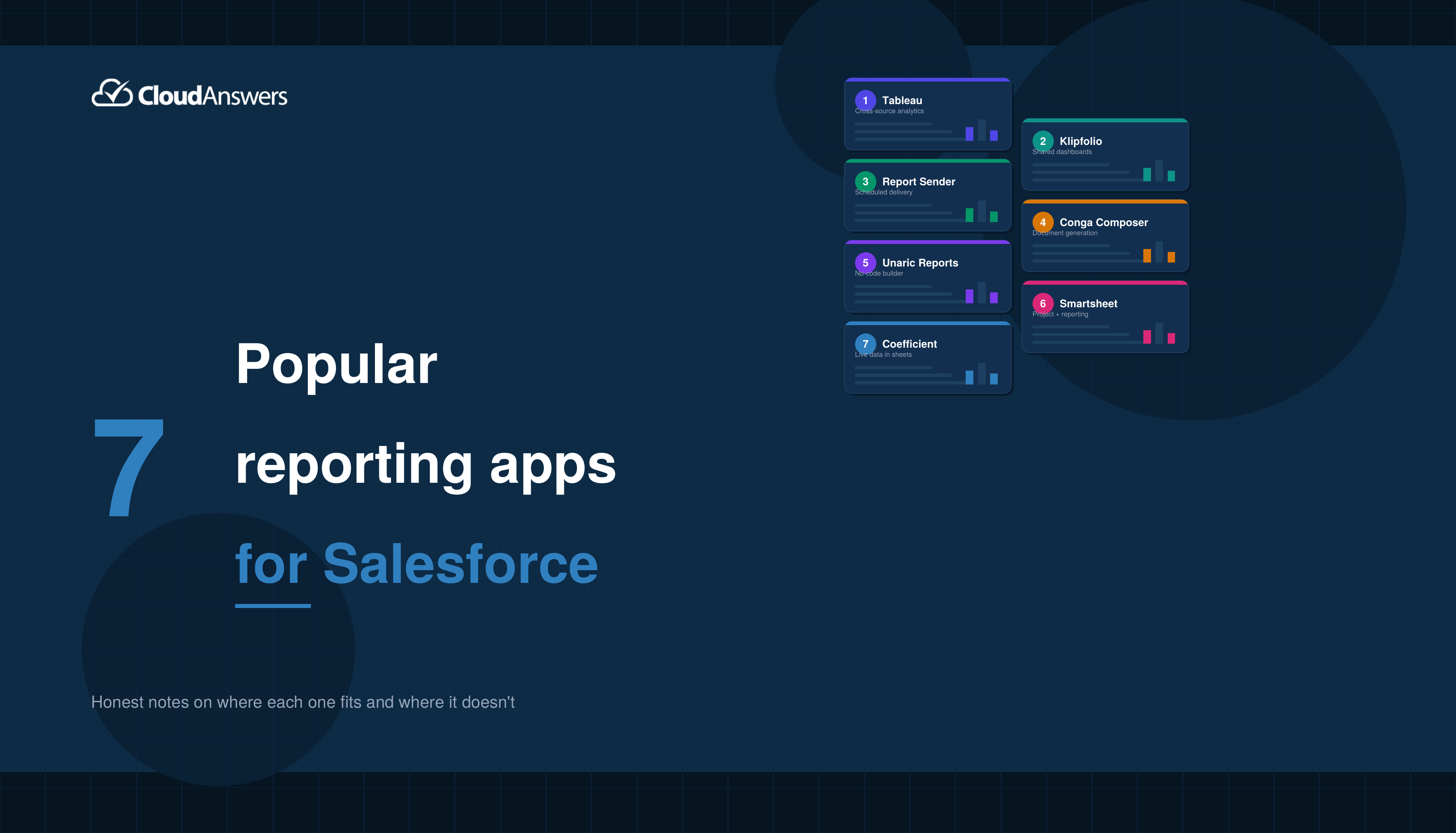
7 Popular Reporting Apps for Salesforce
The profit of your entire Salesforce investment depends a lot on the…
May 18, 2026
9 Min Read

Partners

Company
Get in touch
Locations: New Hampshire, India, Maine, Colorado, Poland, Ukraine, Belarus
Email: help@cloudanswers.com
Phone: +1 508 500 8333